
SUD Videos
Empowering Maternal Recovery:
Stories of Compassionate Care from Louisiana
What is Substance Use Disorder (SUD)?
Substance use disorder (SUD) is a treatable medical condition in which the use of substances, such as drugs or alcohol, affects daily life, social relationships, and overall well-being. Individuals with SUD may experience a loss of control over their substance use, continued use even when it causes problems, needing more of the substance to get the effect they want (tolerance), and the development of withdrawal symptoms. Effective treatment often involves a comprehensive, individualized approach addressing all aspects of addiction. Recovery is complex and defined by each person’s individual experiences.
How does SUD affect pregnant and postpartum women in Louisiana?
Year after year, overdose has remained a leading cause of maternal deaths in Louisiana and across the United States. In 2020 and 2021, drug overdose deaths, particularly deaths involving synthetic opioids like fentanyl, reached record highs in the United States. Among pregnant and postpartum women, drug overdose deaths increased by approximately 81% from 2017 to 2020, with increases in drug overdose mortality being highest in 2020, coinciding with the beginning of the COVID-19 pandemic1. According to the 2020 Louisiana Pregnancy-Associated Mortality Review Report, accidental overdose was the leading cause of death during pregnancy or within one year of the end of pregnancy, regardless of cause.

What can providers do to help pregnant and postpartum women with SUD?
Healthcare providers can play a crucial role in supporting individuals affected by substance use disorders by offering compassionate, stigma-free care, and ensuring access to treatment options. These options include counseling, medication-assisted treatment (or Medications for Opioid Use Disorder [MOUD]), and access to rehabilitation services. Incorporating harm reduction strategies, such as distributing naloxone, promotes safety and reduces the risk of death from substance use. Providing respectful and positive interactions to patients can facilitate shared decision-making while building trust.
What are the effects of stigma on pregnant and postpartum women?
Stigma towards women using substances during pregnancy and the postpartum period can have harmful effects, leading to increased stress and fear of judgment. This can sometimes result in women not accessing important prenatal and postnatal services. Overall, stigma contributes to potential negative health outcomes for both the parent and child.

LaPQC Video Series
The LaPQC video series brings awareness to SUD among pregnant and postpartum individuals. In doing so, the series shows how non-judgmental, compassionate, and evidence-based care for pregnant and parenting patients with SUDs is possible to achieve and improves outcomes.
Video 1:
Do No Harm. A Journey to Ending Stigma in Perinatal Spaces.
Video 1 advocates for a compassionate approach towards individuals with SUD, particularly pregnant women, emphasizing that these conditions are very treatable.
Video 2:
Pregnant and Powerful. A Message For Mothers On the Road to Recovery.
Video 2 addresses the challenges faced by pregnant patients who use substances, with dependency, or SUD. The video illustrates barriers such as shame, fear of judgment, legal concerns, and worries about child welfare that deter them from seeking prenatal care or discussing their situation with medical professionals. Patient stories illuminate supportive approaches from health care providers and instill hope for those struggling with addiction that help is available.
Video 3:
Delivering Change. How Perinatal Clinicians Can Champion Hope, Treatment and Recovery.
Video 3 communicates the alarming prevalence of overdose as the primary cause of death among pregnant and postpartum patients and highlights the urgent need for comprehensive treatment for substance use disorders, which is currently lacking in many communities.
Where can pregnant and postpartum patients and families go for help?
You are not alone and recovery is possible. Visit opioidhelpla.org to find resources and support.
Mental health professionals, obstetricians, peer support specialists, primary care providers, and other health care providers can play a crucial role in connecting patients to appropriate resources and treatment options. Seeking help early in pregnancy is essential for both the well-being of the parent and the child. For patients insured through Louisiana Medicaid, your insurance plan is required to cover treatment for substance use disorder, including case management, medication assisted treatment, and other behavioral health services. Each Medicaid plan also offers additional resources for pregnant enrollees. While not specific to SUD, the BFH Family Resource Center can provide resources and referral support for Louisiana families, pediatric health providers, and individuals. The center works to ensure families receive timely linkage to resources and community programs, at no cost to families or providers.
Where can providers learn more and find support?
The Louisiana Provider-to-Provider Consultation Line (PPCL) is a no-cost provider-to-provider telephone consultation and education program designed to help pediatric and perinatal healthcare providers address their patients’ behavioral and mental health needs. Providers can call (833) 721-2881 Monday-Friday, 8 a.m. – 4:30 p.m., to speak directly with a licensed mental health professional who can respond to questions about behavioral health and behavioral health resources within the community, and, when necessary, connect the provider to a psychiatrist. Providers can also request a consultation online and someone will follow up with a phone call or email. PPCL’s website hosts behavioral health trainings and educational materials.
Providers can also visit opioidhelpla.org to find resources and support.
Social Media
Share these social media graphics to spread awareness of SUD among pregnant and postpartum patients and share resources for families and providers.

Suggested Caption:
Healthcare professionals have an important role in combating stigma and fostering an inclusive healthcare system that encourages individuals with substance use disorders to seek medical care without fear of discrimination and judgment. Learn more at opioidhelpla.org and lapqc.org

Suggested Caption:
Clinicians have a crucial role in combating addiction by offering non-judgmental care, prescribing evidence-based medications for opioid use disorder, and actively supporting recovery. Learn more at opioidhelpla.org and lapqc.org
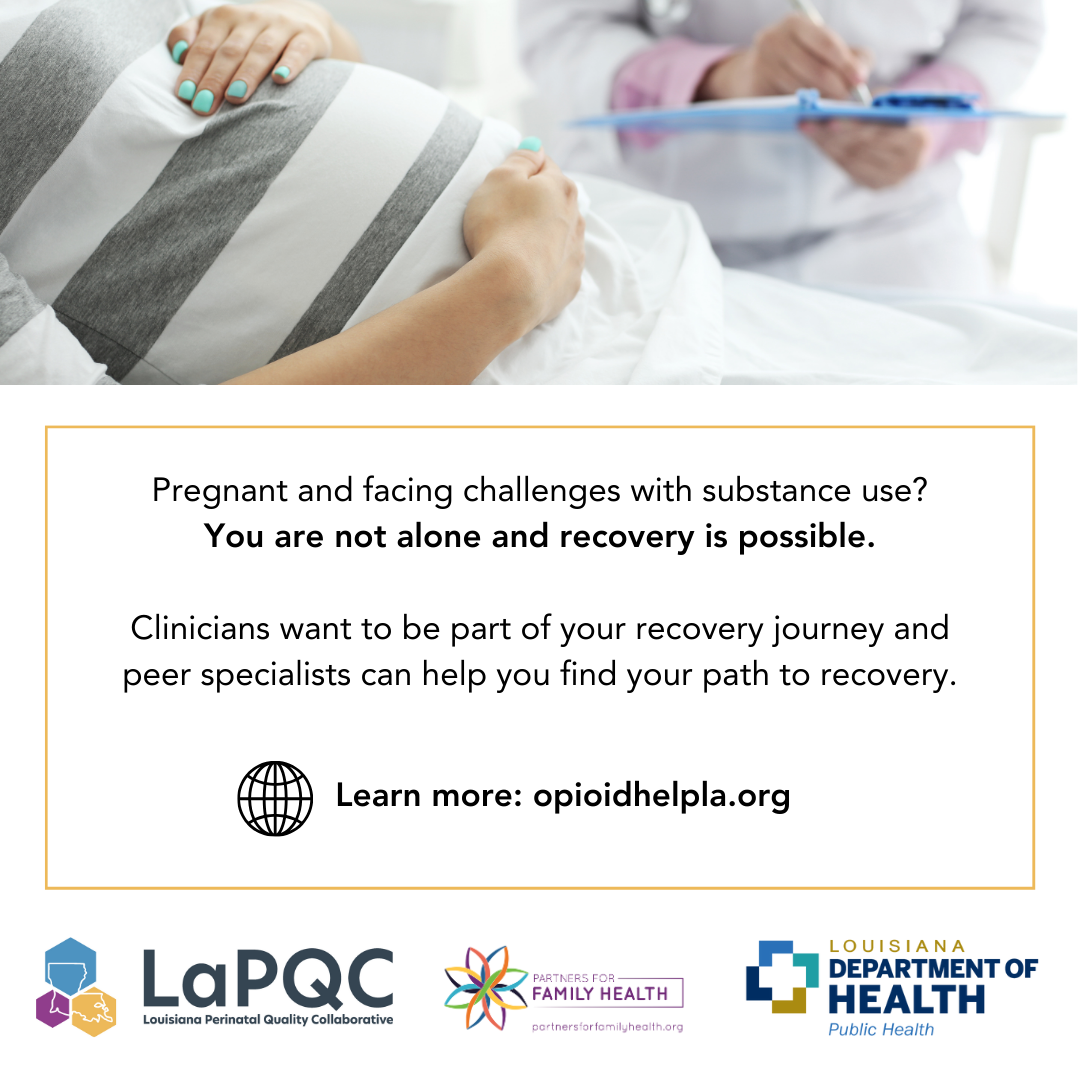
Suggested Caption:
Recovery is possible for everyone and you do not have to do it alone. Resources for pregnant and parenting moms facing substance use disorder are available at opioidhelpla.org/services-for-pregnant-women/ and lapqc.org

Suggested Caption:
Recovery is possible for everyone and you do not have to do it alone. Resources for pregnant and parenting moms facing substance use disorder are available at opioidhelpla.org/services-for-pregnant-women/ and lapqc.org
Click on each image and download to your device. Then upload to your social media platform of choice. Copy and paste the caption to add to your post.